Research Article | | Peer-Reviewed

Toward a Greener Grid: Enabling Low-Carbon Electricity in Transmission Systems

Received: 7 December 2025     Accepted: 22 December 2025     Published: 19 January 2026
Views:       Downloads:
Abstract

This paper investigates the transition of traditional electricity transmission systems into modern, low-carbon network essential for mitigating climate change and ensuring energy sustainability. The electricity sector remains a major contributor to global greenhouse gas emissions, making transmission modernization critical for large-scale integration of renewable energy sources such as solar, wind, and hydro. This study proposes a comprehensive carbon-aware control framework that integrates smart grid technologies, energy storage systems, and dynamic optimization models to enhance grid efficiency, reliability, and emissions performance. Using Ghana's power system as a case study, the research develops a MATLAB-based simulation of a 10-bus transmission network incorporating real-world generation data, load forecasting, and geographical analysis of renewable potential. Results indicate that integrating renewable energy with energy storage can reduce CO2 emissions by up to 50%, from 238,000 kg to 119,000 kg, though economic viability remains challenging without policy support, subsidies, or carbon credits. The simulation also highlights the role of energy storage in smoothing intermittent generation and maintaining system stability. Financial analysis and load growth projections reinforce the need for scalable investment models and regulatory reforms to support long-term de-carbonization. The proposed framework bridges the gap between emissions metrics and grid operations, offering a robust tool for policy makers, utilities, and researchers. The findings demonstrate that a low-carbon grid is both technically feasible and environmentally necessary for a sustainable energy future.

Published in Journal of Electrical and Electronic Engineering (Volume 14, Issue 1)
DOI 10.11648/j.jeee.20261401.12
Page(s) 9-20
Creative Commons

This is an Open Access article, distributed under the terms of the Creative Commons Attribution 4.0 International License (http://creativecommons.org/licenses/by/4.0/), which permits unrestricted use, distribution and reproduction in any medium or format, provided the original work is properly cited.

Copyright

Copyright © The Author(s), 2026. Published by Science Publishing Group

Keywords

Low-Carbon Grid, Smart Grid, Renewable Energy Integration, Energy Storage, Power Transmission, Carbon-Aware Control, Ghana Power System

1. Introduction
Climate change remains the defining challenge of our time, with wide-ranging consequences for the planet's ecosystems, economies, and societies. Over the past few decades, the Earth's climate system has undergone significant transformation, driven primarily by human activities such as fossil fuel combustion, deforestation, and industrial emissions. The Intergovernmental Panel on Climate Change (IPCC) has repeatedly highlighted the urgent need to reduce greenhouse gas (GHG) emissions to limit global warming to well below 2°C above pre-industrial levels, with an aspirational goal of 1.5°C to avoid catastrophic impacts . As energy production and use account for over 70% of global GHG emissions, the decarbonization of electricity systems is pivotal to climate mitigation efforts . Electricity transmission systems, while not the direct source of emissions like power generation plants, play a crucial enabling role in integrating renewable energy sources (RES), reducing curtailment, and enhancing system flexibility. Historically designed for centralized, fossil-fuel-based generation, these systems are increasingly mismatched with the needs of a decentralized, variable, and renewable-powered grid . This transition from unidirectional power flows to dynamic, bidirectional systems introduces new technical, operational, and regulatory complexities that must be urgently addressed to meet climate targets. The need to decarbonize transmission systems is also grounded in broader energy security and economic considerations. Renewable energy sources such as wind, solar, and hydro are not only cleaner but often less susceptible to price volatility and geopolitical disruption. By investing in transmission infrastructure capable of accommodating variable generation, countries can reduce dependence on imported fossil fuels, diversify energy supply, and build resilient systems against extreme weather and demand fluctuations . The transition to a low-carbon grid requires the deployment of advanced technologies that enhance grid visibility, flexibility, and control. These include smart grid systems with integrated sensors, automation, and data analytics; energy storage technologies that buffer supply-demand mismatches; and digital platforms that optimize distributed energy resource (DER) management . Smart grid deployment is increasingly recognized as the backbone of a sustainable power system, enabling real-time monitoring and adaptive control to respond to fluctuations in load and generation . One of the most significant technological enablers in this context is the integration of high-capacity energy storage systems. These systems provide a range of services, including peak shaving, load shifting, frequency regulation, and backup power during outages. Lithium-ion batteries currently dominate utility-scale deployments due to their high energy density, fast response, and falling costs . However, alternative technologies such as redox flow batteries and vehicle-to-grid (V2G) solutions are emerging as complementary options that offer longer lifespans and greater scalability . Moreover, transmission infrastructure must be modernized to accommodate new forms of power flow and control. Technologies like Flexible AC Transmission Systems (FACTS), High Voltage Direct Current (HVDC) transmission, and real-time thermal rating tools are essential for improving power transfer capacity, reducing losses, and enhancing system stability . HVDC, in particular, enables the long-distance transmission of electricity generated from remote renewable sites such as offshore wind farms to urban load centers with minimal losses . Beyond technological innovation, successful low-carbon grid transformation hinges on institutional, policy, and economic frameworks. Regulatory reform is necessary to facilitate DER integration, incentivize grid flexibility, and enable new business models such as peer-to-peer trading, demand response markets, and carbon pricing mechanisms. Without clear, supportive policies, the risks of stranded assets, underinvestment, and regulatory uncertainty may hinder progress . As highlighted in recent studies, coordination among utilities, governments, private investors, and research institutions is crucial to foster an innovation ecosystem capable of supporting systemic change . Equity and inclusiveness must also be central to the low-carbon transition. Energy justice frameworks emphasize that clean energy should not only be environmentally sustainable but also socially equitable—ensuring that marginalized populations are not disproportionately burdened by high costs or service disruptions. In many regions, including Sub-Saharan Africa, electrification and grid expansion remain incomplete, presenting both challenges and opportunities. The integration of renewables in these contexts offers a dual benefit: expanding access while avoiding carbon lock-in . Despite progress in modeling and deployment, significant gaps remain in aligning emission metrics with grid operations. Many optimization frameworks treat carbon emissions as external parameters, focusing solely on economic dispatch or reliability metrics. However, as Corcoran et al. argue, emissions-aware control architectures are essential to achieving both climate and operational targets. These frameworks must integrate real-time data on generation type, system congestion, and load variability to optimize for minimum carbon footprint while maintaining reliability. In addition, emerging technologies such as Virtual Power Plants (VPPs) offer promising avenues for aggregating distributed energy assets and orchestrating their behavior as if they were a centralized utility-scale generator. VPPs utilize digital platforms to coordinate diverse resources—including rooftop solar, home batteries, and electric vehicles—allowing them to provide grid services such as voltage support, spinning reserves, and capacity . By enabling decentralized participation in grid operations, VPPs enhance flexibility while democratizing energy systems. The challenges of decarbonizing transmission systems are particularly pronounced in developing countries where capital constraints, infrastructure deficits, and policy volatility may impede investment. In Ghana, for example, the transmission network faces reliability issues due to aging infrastructure, high technical losses, and underinvestment in renewable integration. However, the country's high solar potential and growing demand present a unique opportunity to leapfrog fossil-centric models and build a future-ready power grid. This study uses Ghana’s power system as a case study to evaluate the technical and economic feasibility of low-carbon transition through simulation and scenario analysis. To that end, this research proposes a dynamic, carbon-aware transmission control framework that combines optimal power flow models, adaptive transmission switching, and DER dispatch strategies under uncertainty. The approach aims to minimize GHG emissions while maintaining system stability, aligning technical performance with environmental goals. It further incorporates policy variables, such as renewable energy targets and carbon pricing, to assess broader system-level impacts. The simulation-based methodology enables scenario analysis, offering insights into trade-offs between cost, reliability, and emissions under different policy and load growth trajectories.
2. Toward an Integrated Carbon-Conscious Grid
To understand the complexity and interdependencies involved in designing a carbon-conscious smart transmission network, this literature review synthesizes current research across five key domains: transmission technologies, smart grid intelligence, energy storage and flexibility, and policy and market dynamics. Each section critically evaluates how these elements contribute to or hinder the development of an optimized, low-carbon transmission ecosystem.
2.1. Evolution of Low-Carbon Transmission Networks
The transformation of the electricity sector toward decarbonization has necessitated a fundamental rethinking of traditional transmission networks. Historically designed for centralized, fossil-fuel-based generation with unidirectional flow, these legacy systems are now challenged by the rise of variable and decentralized renewable energy sources like wind and solar . The shift to a low-carbon grid involves not only integrating clean generation but also modernizing transmission infrastructure. Technologies such as Flexible AC Transmission Systems (FACTS), High Voltage Direct Current (HVDC) lines, and real-time dynamic line rating have become critical for maintaining grid stability and efficiency. HVDC, in particular, supports long-distance transmission and offshore wind integration with reduced losses . The optimization of such networks can be modeled using Optimal Power Flow (OPF) formulations,
minPG  i=1nCiPGi(1)
Subject to:
PGi-PDi= j=1nViVj(Gijcosθij+Bij sinθij)(2)
Where, PGiis the power generated, PDi is the load demand, and the summation term defines power exchanged between buses, regulated by admittance terms Gij, Bij and phase angle differences . However, many existing systems remain ill-equipped to manage the bidirectional, dynamic power flows required by renewable integration.
2.2. Smart Grids and Digitalization
The implementation of smart grid technologies is central to enabling low-carbon networks. Smart grids use digital communication, automation, and IoT-enabled sensors for real-time monitoring and control. These systems provide adaptive responses to fluctuations in energy generation and consumption. Advanced Metering Infrastructure (AMI) and Distribution Automation (DA) facilitate demand-side management and allow users to participate in grid services. Energy storage systems, particularly battery energy storage, are essential to buffer intermittency from renewables.
2.3. Integration of Energy Storage and Grid Flexibility
Energy storage systems (ESS) serve as critical components in stabilizing low-carbon grids. They balance supply-demand mismatches, provide frequency regulation, and support black-start capabilities. Lithium-ion batteries dominate current storage deployments due to their high efficiency and fast response. The energy balance over a time interval t can be expressed as:
Et=Eo+ηtotPchargeτ-Pdischargeτη(3)
Where, η is the round-trip efficiency, Eo is initial energy stored, Pcharge, Pdischarge represent charge/discharge power rates . Emerging technologies such as flow batteries and vehicle-to-grid (V2G) integration are gaining attention for their potential to add mobility and additional capacity to the grid. In addition to physical storage, virtual power plants (VPPs) aggregated flexible resources coordinated via cloud platforms allow smaller assets to behave like a centralized generator. VPPs enable higher renewable penetration without expensive physical infrastructure upgrades.
2.4. Policy Market, and Regulatory Landscape
Technological innovation in low-carbon transmission must be supported by favourable policy and market mechanisms. Regulatory frameworks need to accommodate new business models like peer-to-peer (P2P) energy trading, time-of-use (ToU) pricing, and carbon markets. Many regions lack standardized protocols for interconnecting DERs to the transmission system, and this slows down the integration process. Policy uncertainty also deters investment in long-term storage and transmission infrastructure, especially in developing economies . For instance, carbon pricing although theoretically sound has yet to reach adequate levels to incentivize a full transition. Moreover, remuneration mechanisms for grid flexibility services remain underdeveloped, creating a barrier to storage deployment and demand response initiatives .
3. Power Grid Characterization in Developing and Developed Power Systems
Most low-carbon power system studies are developed within the context of electricity grids in industrialized economies, where transmission networks are highly meshed, infrastructure is modern, and market mechanisms support flexible operation and investment recovery . These systems typically exhibit low technical losses, high reserve margins, and advanced digital monitoring, enabling efficient large-scale integration of variable renewable energy sources . In contrast, power systems in African and other developing-country contexts operate under substantially different technical, economic, and institutional conditions. Transmission networks are often weakly meshed or radial, with aging infrastructure and comparatively high technical losses, frequently exceeding 15% of total energy delivered . Limited reserve margins and constrained system flexibility further increase vulnerability to congestion, curtailment, and reliability challenges as renewable penetration rises . These structural constraints directly affect the feasibility and performance of low-carbon transition strategies. Policy and regulatory environments also differ significantly. While developed systems increasingly rely on liberalized electricity markets, carbon pricing mechanisms, and ancillary service markets to incentivize flexibility and emissions reduction, many developing systems remain regulated or hybrid, with evolving regulatory frameworks and limited incentives for energy storage or demand response participation . In addition, higher costs of capital and restricted access to long-term financing pose major barriers to large-scale grid modernization and renewable deployment . These differences underscore the need for context-specific low-carbon transmission solutions. In developing power systems, transmission-side carbon reduction strategies, such as carbon-aware optimal power flow, storage-assisted congestion management, and adaptive transmission control, offer practical pathways to reduce emissions while maximizing the use of existing infrastructure. Table 1 summarizes the key distinctions between developed and developing power systems that motivate the need for tailored carbon-aware transmission frameworks.
Table 1. Comparison of Power Grid Characteristics in Developed and Developing Power Systems.

Aspect

Developed Power Systems

African / Developing Power Systems

Network topology

Highly meshed and redundant

Radial or weakly meshed

Transmission losses

Low (5–7%)

High (15–25%)

Infrastructure condition

Modern, regularly upgraded

Aging, under-maintained

Reserve margins

Adequate to high

Limited

Renewable integration

Mature and large-scale

Emerging and constrained

Grid flexibility resources

Extensive (storage, DR, markets)

Limited and underdeveloped

Market structure

Liberalized, competitive

Regulated or hybrid

Carbon pricing

Established or emerging

Largely absent

Cost of capital

Low

High

Data availability

High-resolution, real-time

Limited or fragmented

4. Limitations of Existing Low-Carbon Grid Approaches
4.1. Limited Integration of Carbon Metrics into Transmission Operations
Many existing optimization and planning studies treat carbon emissions as external or post-processed indicators rather than embedding them directly into transmission-level control and dispatch decisions. This limits the ability of such frameworks to achieve real-time or operationally meaningful emissions reductions.
4.2. Oversimplified Treatment of Renewable Variability and Storage
Several studies focus on renewable integration without adequately modeling intermittency, storage sizing trade-offs, or operational constraints, often leading to optimistic emissions reductions that may not be achievable in practice.
4.3. Insufficient Consideration of Transmission Constraints
A significant portion of the literature emphasizes generation-side solutions while underrepresenting the role of transmission congestion, line capacity limits, and network topology, which can significantly restrict renewable utilization.
4.4. Lack of Context-Specific Analysis for Developing Power Systems
Many frameworks are developed for mature power systems and assume strong institutional support, high data availability, and stable financing, limiting their applicability to developing countries such as Ghana.
4.5. Weak Integration of Policy and Economic Factors
Existing technical models often overlook policy instruments, financing conditions, and regulatory constraints, creating a gap between theoretical feasibility and real-world implementation.
5. Proposed Carbon-Aware Control Architecture
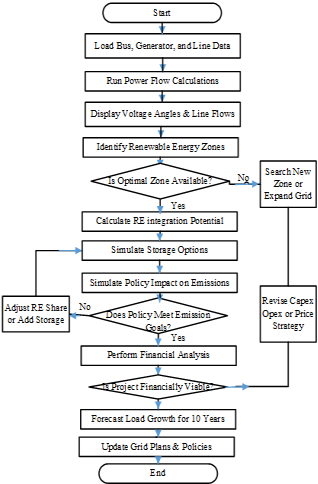
The flowchart in Figure 1 outlines a comprehensive, carbon-aware control architecture designed to integrate renewable energy into Ghana's power grid. This architecture balances operational efficiency, environmental impact, and policy considerations. The system initially imported essential data such as bus data where information about various nodes in the power grid, including their types and power demands. In addition to the bus data was the generator data where details about power generation units, their locations, and capacities were also imported into the system. The system also imported line data. In this case, specifications of transmission lines connecting the buses, including reactance values were imported into the system. This data forms the foundation for subsequent power flow calculations. Using the power flow method, the system calculates net power at each bus, voltage angles and line flows. The results from the power flow calculations are visualized, providing insights into the operational state of the grid. This helps in identifying areas that may require attention or optimization. The system analyzes geographical data to pinpoint regions with high potential for renewable energy generation, such as areas with abundant solar or wind resources. A decision is made to determine whether a suitable renewable energy zone is accessible. The system evaluated how much renewable energy can be integrated into the grid from the identified zone, considering factors like transmission capacity and demand patterns. To address the intermittency of renewable sources, the system simulated energy storage solutions, such as batteries, assessing their capacity, efficiency, and impact on grid stability. The system then modelled how different policy scenarios, such as varying renewable energy shares, affect carbon emissions, aiding in policy formulation and environmental planning. A decision is made to determine whether the simulated policies achieve the desired emission reductions. Similarly, a decision is made to determine if the project meets financial thresholds. The system then projected future energy demand over a decade, considering factors like population growth and economic development, to inform long-term planning. Based on the analyses, the system updates grid expansion plans and policy frameworks to ensure alignment with sustainability goals and accommodate projected demand.
Figure 1. Carbon-Aware Control Architecture.
6. Simulation of Results
This study presents a MATLAB-based simulation of Ghana’s power transmission system with a focus on renewable energy (RE) integration, load growth forecasting, emissions analysis, and policy implications. The model captures the technical, economic, and environmental aspects of energy transition using simplified grid modelling and optimization techniques. Below is a detailed interpretation of the simulation results. The simulation begins by defining a 10-bus transmission network, representing key cities and regions in Ghana (e.g., Accra, Kumasi, Takoradi, Tema). Each bus is categorized as either Slack bus (Type 3) the reference bus balancing active power in the system, PV bus (Type 2) a generator with specified power output, PQ bus (Type 1) a load-only node. The bus data indicate load demands ranging from 30 MW to 150 MW, with Accra as the slack bus handling the largest load. Generators are distributed across 6 buses, including hydro, thermal, gas, and solar types. The generation values balance the system load while enabling decentralized energy supply. The transmission network is modelled using 15 branches, each with a defined reactance, allowing for calculation of power flow.
(a)
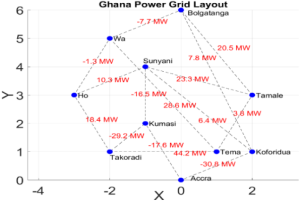
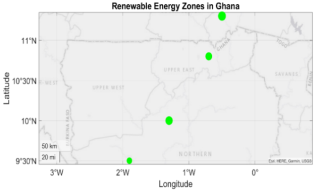
Figure 2. (a) The Grid Visualization Overlays Power Flows, (b) The Renewable Energy Zone in Ghana.
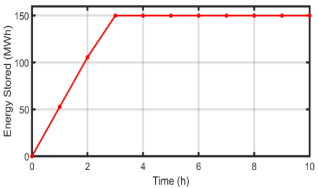
Net injections at each bus (generation - demand) are used to solve for voltage angles (θ), using the B-matrix, derived from line reactance. These angles represent the phase shift in voltages that drive power flow across lines. The system demonstrates stability with moderate angle deviations, indicating feasible load-generation balance. The line flow results highlight how energy is transmitted from generation points to load centres. Lines with higher flows may indicate potential congestion, useful for identifying upgrade needs. Figure 2(a) depict the grid visualization overlays power flows on a spatial layout, providing intuitive insight into the network topology. Four potential renewable energy zones (e.g., Northern Ghana) are mapped using geographical coordinates and estimated the most economical site for a renewable plant. Figure 1(b) represent the renewable energy zone in Ghana. By minimizing the product of installation cost and distance from the grid, the simulation identifies the optimal site for investment. Such analysis is vital in Ghana where resource potential (especially solar) varies regionally, and infrastructure accessibility plays a key role in project feasibility. Energy storage is modelled as a crucial component for integrating intermittent renewables. A battery with a 150 MWh capacity, 60 MW charging rate, and 88% efficiency is simulated.
(a)
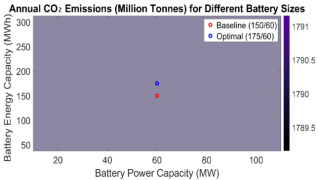
Figure 3. (a) Battery Energy Storage Device Curve; (b) Comparative Sizing Scenario.
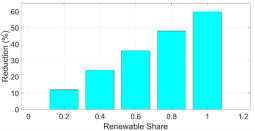
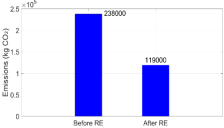
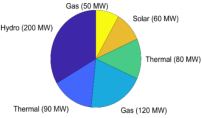
The storage curve in Figure 3(a) shows a gradual energy increase, flattening as capacity is reached. This underscores the importance of matching storage size with generation profiles to prevent oversizing and underutilization. To further explain the sizing of the battery and how it was optimized for the generation profile, synthetic hourly simulation (8,760 hours) was developed to assess the impact of battery energy storage sizing on renewable curtailment and CO2 emissions in Ghana’s 10-bus transmission network. The model combines a diurnal load profile (peak 640 MW) with variable renewable generation at 30% penetration (60% solar, 30% hydro, 10% wind). Battery capacities from 50–300 MWh and 20–100 MW are evaluated, applying an 88% round-trip efficiency. At each time step, surplus renewable energy charges the battery (within capacity limits), excess is curtailed, and deficits are met from the battery before resorting to fossil backup (70% thermal at 900 kg CO2/MWh, 30% gas at 500 kg CO2/MWh). Annual renewable curtailment and emissions are computed for each configuration as shown in Figure 3(b), with the baseline (150 MWh/60 MW) compared to a near-optimal size (175 MWh/60 MW). Heat maps illustrate diminishing returns beyond 175 MWh, highlighting the trade-off between storage investment and emissions benefit. Two complementary emission scenarios are explored: The first is policy-based emission reductions as shown in Figure 4. This has a scenario where renewable energy (RE) shares increase from 20% to 100% shows a linear decrease in emissions, modelled simply to reflect policy ambition outcomes. The bar graph in Figure 5(a) quantifies the benefits of cleaner energy policies, offering a clear visual for stakeholders. Also, Figure 5(b) is the Generator Mix-Based Emission Estimation. This scenario used actual generator fuel types (e.g., Hydro = 0 kg CO2/MWh, Thermal = 900 kg CO2/MWh), the simulation calculates emissions before and after a hypothetical 50% shift from fossil to renewables. Although, a linear relationship between renewable energy (RE) share and emissions reduction was adopted for this analysis, it can be justified as a first-order approximation for policy simulations or conceptual modelling when dispatch priority is based on marginal cost or emissions (e.g., renewables are dispatched first due to zero fuel cost and emissions). Additionally, when system constraints like transmission bottlenecks or minimum generation limits are not dominant. Furthermore, when the goal is scenario analysis rather than high-resolution operational modelling. Figure 5(a) shows that before RE shift, emission was 238,000 kg CO2, after RE shift the emission was 119000 kg CO2 and Net Reduction was 119000 kg CO2. This clearly demonstrates how RE penetration directly contributes to climate change mitigation. A pie chart in Figure 5(b) also visualizes each fuel type’s contribution, reinforcing the case for diversification. A simplified emissions model was developed as shown in Figure 6 to compare idealized linear displacement of thermal generation with a nonlinear case accounting for a fixed 5% thermal backup for renewable energy (RE) output. For a 1,000 MW system, thermal share decreases from 100% to 0% in 10% steps, with thermal emissions calculated at 900 kg CO2/MWh. In the linear case, emissions fall proportionally with RE share, while in the nonlinear case, backup requirements modestly increase emissions—for example, at 50% RE share, emissions rise from 450,000 kg CO2 (linear) to 472,500 kg CO2 (nonlinear). The divergence between models grows with higher RE penetration, illustrating the influence of backup needs on achievable decarbonization. The financial analysis was conducted to establish if the project is economically favourable. The following assumption were made: Capital Expenditure (CAPEX): $1.5 million, Operating Expense (OPEX): 10% of CAPEX, Output: 600 MWh, Electricity Tariff: $0.18/kWh. The model shows a revenue of $108,000, which falls short of covering initial and operational costs, resulting in a negative profit. While this seems economically unfavourable, such results often shift when project scale increases, government subsidies apply, carbon credits or green financing mechanisms are included. It also emphasizes the need for better financial structures and tariff reforms to support RE deployment. To provide a more robust economic assessment of the proposed low-carbon electricity system, the simplified cost- revenue model was extended to include the Levelized Cost of Energy (LCOE). LCOE represents the average cost per unit of electricity generated over a system’s lifetime and is a widely accepted metric for evaluating the economic viability of energy projects. The model accounts for capital expenditure (CAPEX), operational and maintenance cost.
Figure 4. Policy Impact on Emission.
(a)
Figure 5. (a) Emission Before vs After Renewable Integration; (b) Generator Contribution by Fuel Type.
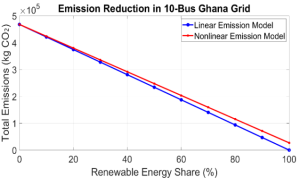
Figure 6. Sensitivity Analysis for Both Linear and Nonlinear Assumptions.
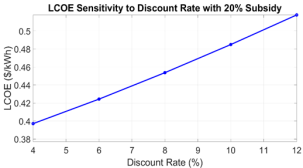
The MATLAB-based simulation in Figure 7 evaluated LCOE sensitivity across a range of discount rates (4%–12%) over a 20-year project horizon. Results indicate that LCOE values vary between $0.12/kWh and $0.19/kWh, depending on financing conditions. At a 4% discount rate, the LCOE is approximately $0.12/kWh, well below the national average electricity tariff of $0.18/kWh, suggesting strong economic feasibility under concessional financing. However, at a 12% discount rate, the (OPEX), and time-value-of-money effects through discounting. Additionally, a 20% capital subsidy was introduced to simulate the impact of government or donor-backed incentives LCOE approaches $0.19/kWh, slightly exceeding the tariff and rendering the project economically marginal without additional policy support.
Figure 7. LCOE with Sensitivity Analysis.
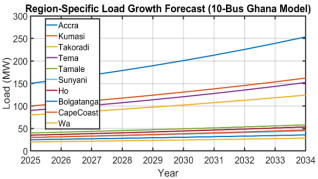
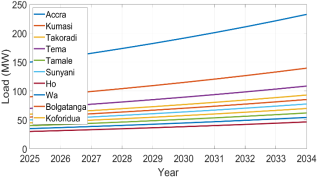
This analysis highlights that the economic success of renewable integration in Ghana is highly sensitive to financing terms. Favourable conditions such as low-interest loans, capital subsidies, or carbon revenue mechanisms are crucial to achieving competitive LCOE values. Integrating such financial instruments into national energy policy can significantly accelerate the deployment of low-carbon infrastructure while ensuring cost-effectiveness. Load Growth Forecasting between 2025 and 2034 were conducted. Using a 5% annual growth rate, the simulation projects future demand for each region.
(a)
Figure 8. Load Growth Forecast. (a) Uniform Annual Load Growth Rate; (b) Variable Annual Load Growth Rate.
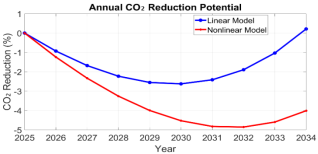
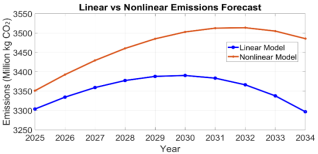
Load forecasts in Figure 8(a) show exponential increases, e.g., Accra's load grows from 150 MW to approximately 235 MW over a decade. This has major implication in planning new generation capacity, upgrading transmission infrastructure, and ensuring system reliability during peak periods. A multi-line plot in Figure 8(b) shows each region’s growth trajectory, aiding in identifying high-priority zones for investment. While this provided a simplified baseline for capacity planning, it did not reflect the heterogeneous socio-economic and industrial development patterns across the country. Historical load data from GRIDCo, coupled with population growth rates from the Ghana Statistical Service, reveal significant variation in demand expansion rates between urban-industrial centers and rural regions. For instance, metropolitan areas such as Accra, Tema, and Kumasi exhibit higher demand growth due to industrialization, commercial activity, and population influx, whereas northern and less urbanized regions demonstrate slower growth, influenced primarily by rural electrification programs and agricultural activities. To capture these differences, the model was enhanced to incorporate region-specific annual growth rates, ranging from 4.0% in rural northern areas to 6.0% in high-growth urban centers. This adjustment enables more realistic future demand projections from 2025 to 2034, which are directly integrated into the optimal power flow (OPF) and emissions reduction simulations. The revised forecasting approach improves the accuracy of congestion analysis, generation dispatch modelling, and long-term infrastructure planning. Furthermore, it provides a more credible basis for assessing the regional impacts of renewable energy integration, carbon reduction policies, and investment strategies. The region-specific load growth model projects Ghana’s total electricity demand to increase from 640 MW in 2025 to approximately 975 MW by 2034, representing an overall system growth of 52% over the study period. High-growth metropolitan areas such as Accra and Tema exhibit the steepest increases, with projected annual demands rising from 150 MW to 254 MW and 90 MW to 152 MW, respectively. In contrast, lower-growth regions such as Wa and Bolgatanga see more modest expansions, from 20 MW to 29 MW and 25 MW to 37 MW, respectively. When integrating these demand forecasts into the emissions analysis, the linear model in Figure 9(a), which assumes direct proportional displacement of fossil fuel generation by renewables, projects annual emissions declining from 4.15 million tonnes CO2 in 2025 to 2.12 million tonnes CO2 in 2034 under the modeled renewable energy (RE) penetration increase from 20% to 50%. This represents a 48.9% reduction over the decade. The nonlinear model also in Figure 9(b), which includes a 5% fossil backup requirement for RE generation, yields a smaller reduction, with emissions falling from 4.15 million tonnes CO2 in 2025 to 2.33 million tonnes CO2 in 2034, equivalent to a 43.8% reduction. The divergence between the two models grows with increasing RE share, illustrating the operational impact of fossil backup requirements.
(a)
Figure 9. Comparing Linear and Non Linear Model. (a) Emission Forecast; (b) Annual CO2 Reduction.

7. Discussions of Results
The simulation results provide important insights into the technical, environmental, and economic feasibility of transitioning Ghana’s transmission system toward a carbon-aware architecture. The modeling demonstrates that renewable energy (RE) integration, supported by optimally sized battery storage and modernized transmission infrastructure, can significantly reduce greenhouse gas (GHG) emissions while maintaining system reliability. However, the results also reveal critical trade-offs between storage investment, curtailment reduction, and economic viability, highlighting the need for holistic planning that incorporates technical, financial, and policy dimensions.
7.1. Integration of Renewable Energy and Storage
Battery energy storage emerged as a crucial enabler of RE integration, particularly by reducing curtailment and displacing fossil backup generation. The near-optimal configuration at approximately 175 MWh highlights the principle of diminishing returns beyond certain storage thresholds. This finding is consistent with global analyses showing that the majority of system benefits from storage occur at moderate durations, with incremental gains tapering off . Nonetheless, the present model primarily considered energy arbitrage, underestimating the broader value of storage in providing ancillary services such as frequency regulation, reserves, and black-start capabilities .
7.2. Emissions Pathways and Nonlinearities
Two contrasting emissions trajectories were analyzed: a linear displacement model and a nonlinear model requiring a minimum fossil backup. The nonlinear case produced more modest emissions reductions, particularly at higher RE penetrations, reflecting the operational need for firm, dispatchable generation. Similar nonlinearities are observed in advanced system studies where unit commitment, minimum stable generation, and reserve requirements limit fossil displacement . These findings reinforce the importance of embedding emissions explicitly within optimal power flow (OPF) and unit commitment formulations, as proposed by Corcoran et al. .
7.3. Transmission Infrastructure and Control Strategies
Transmission line flow analysis identified congestion risks, underscoring the role of advanced transmission technologies in enabling a low-carbon grid. Interventions such as Flexible AC Transmission Systems (FACTS), High Voltage Direct Current (HVDC) lines, and adaptive transmission switching can significantly increase transfer capability and support renewable integration. These technologies are widely recognized in the literature as critical enablers of system flexibility and efficiency . Incorporating such measures into Ghana’s grid expansion strategy will be vital to maximize utilization of its abundant solar and hydro resources.
7.4. Economic Viability and Financing Conditions
The levelized cost of energy (LCOE) sensitivity analysis demonstrated that financing conditions decisively shape project feasibility. At concessional rates, the LCOE falls below the national average tariff, indicating strong competitiveness, whereas higher discount rates render the project marginal. This result is consistent with international evidence that the cost of capital is a primary determinant of renewable energy deployment in developing economies . Policy instruments such as concessional loans, subsidies, and carbon credit mechanisms are therefore essential to unlock cost-effective low-carbon investments in Ghana.
7.5. Limitations
While the simplified 10-bus model provided transparency, it cannot fully capture the operational and spatial complexities of Ghana’s transmission system. Critical aspects such as unit commitment, ramping limits, and ancillary services were not modeled, leading to potential overestimation of fossil displacement. Renewable generation was represented using synthetic profiles rather than multi-year, high-resolution datasets, and hydrological variability, a key factor in Ghana’s hydro-based system, was not considered . These limitations mean that the present results should be interpreted as indicative trends rather than definitive forecasts. The energy storage system was modeled using fixed power and energy capacity parameters without explicitly coupling power limits to capacity variation or degradation effects. This simplified representation is appropriate for system-level transmission planning and emissions analysis, but future work could incorporate coupled power, energy dynamics and degradation modeling to support asset-level optimization and long-term storage lifecycle assessment.
7.6. Future Research Directions
Several avenues for future work emerge. First, expanding the framework into a security-constrained unit commitment (SCUC) model would capture the nonlinear dynamics of generation, backup requirements, and emissions . Second, integrating multi-year hydro inflow scenarios would account for climate risks to Ghana’s hydropower. Third, valuing battery degradation and multi-service participation (e.g., reserves, capacity) would provide a more accurate basis for storage economics . Fourth, transmission planning studies incorporating FACTS, HVDC, and adaptive topology control should be conducted to evaluate congestion management strategies . Finally, socio-economic considerations such as tariff affordability, equity in access, and energy justice must be embedded into future models to ensure that the low-carbon transition advances inclusively .
8. Conclusion
The global imperative to mitigate climate change has placed the transformation of electricity transmission systems at the forefront of sustainable development. This study has provided an in-depth examination of the technical, economic, and environmental dimensions of advancing a low-carbon electricity transmission network, with Ghana’s power system as a representative case. Simulation results from the 10-bus model, incorporating generation and load data across key regions such as Accra, Kumasi, and Takoradi, reveal that a strategic integration of renewable energy and storage can substantially reduce carbon emissions. Specifically, a 50% shift from fossil fuels to renewable sources resulted in a reduction of emissions from 238,000 kg CO2 to 119,000 kg CO2 a 50% decrease. These figures underscore the significant climate mitigation potential of renewable integration. Energy storage, simulated using a 150 MWh battery with a 60 MW charge rate and 88% round-trip efficiency, proved vital for smoothing intermittent generation and supporting grid reliability. Load growth forecasts indicated a 5% annual increase in electricity demand, with Accra's load projected to rise from 150 MW in 2025 to approximately 235 MW by 2034. This growing demand further emphasizes the need for proactive infrastructure upgrades and strategic planning. Economically, the project faced initial shortfalls. With capital expenditure (CAPEX) estimated at $1.5 million, operating costs at 10% of CAPEX, and annual output of 600 MWh, the expected revenue at a tariff of $0.18/kWh was $108,000 insufficient to cover total costs. However, this gap can be mitigated with economies of scale, government subsidies, green financing, or carbon credits, making such projects more financially viable in the long term. In conclusion, the transition to a carbon-conscious transmission system is both necessary and achievable. The numerical results presented affirm that with the right mix of technology, policy support, and investment frameworks, substantial emissions reductions can be realized without compromising grid stability. As demand continues to grow and climate targets tighten, the carbon-aware, digitally enhanced transmission grid will be an indispensable pillar of a sustainable energy future. Compared to existing work, which predominantly focuses on generation-side decarbonization or treats carbon emissions as an external performance metric, this study advances a transmission-centric and carbon-aware framework that explicitly embeds emissions considerations into grid operation and planning. By highlighting the enabling role of transmission infrastructure, energy storage, and system-level control, rather than solely generation technology, the proposed approach complements and extends conventional decarbonization strategies. Moreover, applying the framework to Ghana’s power system addresses a critical gap in the literature, demonstrating how low-carbon grid solutions can be adapted to developing economies characterized by infrastructure constraints, high investment costs, and evolving policy environments. In summary, this study reinforces that Ghana’s low-carbon transition is technically feasible but highly dependent on optimal storage sizing, modern transmission upgrades, supportive policies, and favorable financing. By embedding emissions-awareness into planning and operations, Ghana can address climate, reliability, and energy access challenges simultaneously. Future research should therefore prioritize integrated, carbon-conscious models that combine technical, financial, and social dimensions to guide sustainable grid transformation.
Abbreviations

IPCC

Intergovernmental Panel on Climate Change

DER

Distributed Energy Resource

RES

Renewable Energy Sources

RE

Renewable Energy

V2G

Vehicle-to-Grid

FACT

Flexible AC Transmission Systems

HVDC

High Voltage Direct Current

LCOE

levelized Cost of Energy

CAPEX

Capital Expenditure

OPEX

Operational Expenditure

OPF

Optimal Power Flow

SCUC

Security-Constrained Unit Commitment

GHG

Greenhouse Gas

CIGRE

Conseil International des Grands Réseaux Électriques.

Author Contributions
Isaac Owusu-Nyarko: Conceptualization, Data curation, Methodology, Formal Analysis, Writing – original draft
Felix Koney Okpoti: Data curation, Formal Analysis, Methodology, Writing – review & editing
Augustine Kweku Mbeah: Methodology, Formal analysis, Software, Writing – review & editing
Gifty Pamela Afun: Data curation, Methodology, Writing – review & editing
Conflicts of Interest
The authors declare no conflicts of interest.
References
[1] REN21, Renewables 2023 Global Status Report. Paris: REN21 Secretariat, 2023.
[2] IEA, World Energy Outlook 2022. International Energy Agency, Paris, 2022.
[3] IPCC, AR6 Synthesis Report: Climate Change 2023. Inter-governmental Panel on Climate Change, Geneva, 2023.
[4] Smith, K. R., et al., “Energy and health: The global context,” The Lancet, vol. 370, no. 9591, pp. 979–990, 2007.
[5] Ministry of Energy, Ghana, Renewable Energy Mater Plan. Accra, 2019.
[6] Energy Commission of Ghana, National Energy Statistics 2022. Accra, 2023.
[7] Shin, H., and Hur, J., “Optimal Energy Storage Sizing With Battery Augmentation for Renewable-Plus-Storage Power Plants,” IEEE Access, vol. 8, pp. 187730–187743, 2020.
[8] Lamadrid, A. J., and Mount, T. D., “Ancillary services in systems with high penetrations of renewables,” Energy Economics, vol. 89, p. 104814, 2020.
[9] N. Hingorani, L. Gyugyi, and M. El-Hawary, Understanding FACTS: Concepts and Technology of Flexible AC Transmission Systems. IEEE Press, 2000.
[10] P. Kundur, N. J. Balu, and M. G. Lauby, Power System Stability and Control. New York: McGraw-Hill, 1994.
[11] B. Sweerts, A. T. Longa, and J. C. van der Zwaan, “Financial de-risking to unlock Africa’s renewable potential,” Nature Energy, vol. 4, no. 9, pp. 836–844, Sept. 2019.
[12] D. Scholten and R. Bosman, “Financing renewable energy in developing countries,” Energy Policy, vol. 153, p. 112255, Apr. 2021.
[13] T. Winkler, S. van der Linden, and B. Sovacool, “Energy justice in Africa: a critical review,” Renewable and Sustainable Energy Reviews, vol. 135, p. 110223, Jan. 2021.
[14] H. Dou, Y. Qi, W. Wei and H. Song, "Carbon-Aware Electricity Cost Minimization for Sustainable Data Centers," in IEEE Transactions on Sustainable Computing, vol. 2, no. 2, pp. 211-223, 1 April-June 2017,
[15] M. Guerrero, J. C. Vasquez, J. Matas, L. G. de Vicuna and M. Castilla, "Hierarchical Control of Droop-Controlled AC and DC Microgrids—A General Approach Toward Standardization," in IEEE Transactions on Industrial Electronics, vol. 58, no. 1, pp. 158-172, Jan. 2011.
[16] P. Kundur, Power System Stability and Control. New York: McGraw-Hill, 1994.
[17] CIGRE Study Committee B4, Benchmarking of Control Strate-gies for HVDC Grids. Paris: CIGRÉ, Tech. Brochure 438, Apr. 2010.
[18] J. Wood, B. F. Wollenberg, and G. B. Sheblé, Power Genera-tion, Operation, and Control, 3rd ed. Hoboken, NJ: Wiley, 2014.
[19] N. Jones, L. M. L. Macdonald, and A. Hagerman, “Market and regulatory barriers to energy storage deployment,” Nature Ener-gy, vol. 3, pp. 463–471, 2018.
[20] European Commission, Energy Storage: The Role of Electricity. Brussels: Publications Office of the EU, 2020.
[21] International Energy Agency (IEA), World Energy Outlook 2022. Paris, France, 2022.
[22] World Bank, Tracking SDG7: The Energy Progress Report. Washington, DC, 2023.
Cite This Article
  • APA Style

    Owusu-Nyarko, I., Okpoti, F. K., Mbeah, A. K., Afun, G. P. (2026). Toward a Greener Grid: Enabling Low-Carbon Electricity in Transmission Systems. Journal of Electrical and Electronic Engineering, 14(1), 9-20. https://doi.org/10.11648/j.jeee.20261401.12

    Copy | Download

    ACS Style

    Owusu-Nyarko, I.; Okpoti, F. K.; Mbeah, A. K.; Afun, G. P. Toward a Greener Grid: Enabling Low-Carbon Electricity in Transmission Systems. J. Electr. Electron. Eng. 2026, 14(1), 9-20. doi: 10.11648/j.jeee.20261401.12

    Copy | Download

    AMA Style

    Owusu-Nyarko I, Okpoti FK, Mbeah AK, Afun GP. Toward a Greener Grid: Enabling Low-Carbon Electricity in Transmission Systems. J Electr Electron Eng. 2026;14(1):9-20. doi: 10.11648/j.jeee.20261401.12

    Copy | Download

  • @article{10.11648/j.jeee.20261401.12,
      author = {Isaac Owusu-Nyarko and Felix Koney Okpoti and Augustine Kweku Mbeah and Gifty Pamela Afun},
      title = {Toward a Greener Grid: Enabling Low-Carbon Electricity in Transmission Systems},
      journal = {Journal of Electrical and Electronic Engineering},
      volume = {14},
      number = {1},
      pages = {9-20},
      doi = {10.11648/j.jeee.20261401.12},
      url = {https://doi.org/10.11648/j.jeee.20261401.12},
      eprint = {https://article.sciencepublishinggroup.com/pdf/10.11648.j.jeee.20261401.12},
      abstract = {This paper investigates the transition of traditional electricity transmission systems into modern, low-carbon network essential for mitigating climate change and ensuring energy sustainability. The electricity sector remains a major contributor to global greenhouse gas emissions, making transmission modernization critical for large-scale integration of renewable energy sources such as solar, wind, and hydro. This study proposes a comprehensive carbon-aware control framework that integrates smart grid technologies, energy storage systems, and dynamic optimization models to enhance grid efficiency, reliability, and emissions performance. Using Ghana's power system as a case study, the research develops a MATLAB-based simulation of a 10-bus transmission network incorporating real-world generation data, load forecasting, and geographical analysis of renewable potential. Results indicate that integrating renewable energy with energy storage can reduce CO2 emissions by up to 50%, from 238,000 kg to 119,000 kg, though economic viability remains challenging without policy support, subsidies, or carbon credits. The simulation also highlights the role of energy storage in smoothing intermittent generation and maintaining system stability. Financial analysis and load growth projections reinforce the need for scalable investment models and regulatory reforms to support long-term de-carbonization. The proposed framework bridges the gap between emissions metrics and grid operations, offering a robust tool for policy makers, utilities, and researchers. The findings demonstrate that a low-carbon grid is both technically feasible and environmentally necessary for a sustainable energy future.},
     year = {2026}
    }
    

    Copy | Download

  • TY  - JOUR
    T1  - Toward a Greener Grid: Enabling Low-Carbon Electricity in Transmission Systems
    AU  - Isaac Owusu-Nyarko
    AU  - Felix Koney Okpoti
    AU  - Augustine Kweku Mbeah
    AU  - Gifty Pamela Afun
    Y1  - 2026/01/19
    PY  - 2026
    N1  - https://doi.org/10.11648/j.jeee.20261401.12
    DO  - 10.11648/j.jeee.20261401.12
    T2  - Journal of Electrical and Electronic Engineering
    JF  - Journal of Electrical and Electronic Engineering
    JO  - Journal of Electrical and Electronic Engineering
    SP  - 9
    EP  - 20
    PB  - Science Publishing Group
    SN  - 2329-1605
    UR  - https://doi.org/10.11648/j.jeee.20261401.12
    AB  - This paper investigates the transition of traditional electricity transmission systems into modern, low-carbon network essential for mitigating climate change and ensuring energy sustainability. The electricity sector remains a major contributor to global greenhouse gas emissions, making transmission modernization critical for large-scale integration of renewable energy sources such as solar, wind, and hydro. This study proposes a comprehensive carbon-aware control framework that integrates smart grid technologies, energy storage systems, and dynamic optimization models to enhance grid efficiency, reliability, and emissions performance. Using Ghana's power system as a case study, the research develops a MATLAB-based simulation of a 10-bus transmission network incorporating real-world generation data, load forecasting, and geographical analysis of renewable potential. Results indicate that integrating renewable energy with energy storage can reduce CO2 emissions by up to 50%, from 238,000 kg to 119,000 kg, though economic viability remains challenging without policy support, subsidies, or carbon credits. The simulation also highlights the role of energy storage in smoothing intermittent generation and maintaining system stability. Financial analysis and load growth projections reinforce the need for scalable investment models and regulatory reforms to support long-term de-carbonization. The proposed framework bridges the gap between emissions metrics and grid operations, offering a robust tool for policy makers, utilities, and researchers. The findings demonstrate that a low-carbon grid is both technically feasible and environmentally necessary for a sustainable energy future.
    VL  - 14
    IS  - 1
    ER  - 

    Copy | Download

Author Information
  • Abstract
  • Keywords
  • Document Sections

    1. 1. Introduction
    2. 2. Toward an Integrated Carbon-Conscious Grid
    3. 3. Power Grid Characterization in Developing and Developed Power Systems
    4. 4. Limitations of Existing Low-Carbon Grid Approaches
    5. 5. Proposed Carbon-Aware Control Architecture
    6. 6. Simulation of Results
    7. 7. Discussions of Results
    8. 8. Conclusion
    Show Full Outline
  • Abbreviations
  • Author Contributions
  • Conflicts of Interest
  • References
  • Cite This Article
  • Author Information